Badger Website
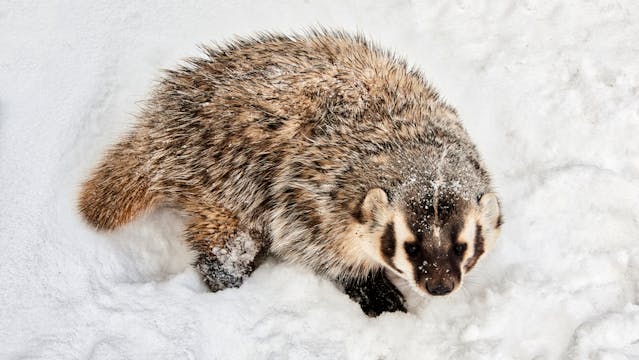
American Badger ( Taxidea taxus )
Continent
North America
Description
The American badger, a powerful and highly efficient digger, is a native of the grasslands and open woodlands of North America. This often-underappreciated member of the mustelid family is crucial to the health of its ecosystem, playing a key role in soil aeration and pest control.
Physical Characteristics & Habitat: American badgers are smaller than their European counterparts, typically weighing 9-12kg (20-26lbs) and measuring 50-72cm (20-28in) in length. They have a robust, low-slung body build, with short, powerful legs and long claws perfectly suited for digging. Their fur is a grizzled grey-brown colour, often with a distinctive white stripe running from the nose to the shoulders. A black mask across the eyes gives them a recognizable appearance.
They inhabit a range of habitats, including prairies, grasslands, agricultural lands, and open woodlands, across much of western and central North America. They require loose, easily workable soil for digging burrows. They favour areas where there's a high population of ground-dwelling rodents – their primary food source.
Behaviour & Diet: American badgers are primarily nocturnal, spending their days within their burrows. Their dens are extensive, with multiple entrances and chambers, often used for many years and maintained diligently. While generally solitary, they will sometimes tolerate the presence of other badgers, particularly during breeding season. They are not particularly social animals.
Their diet consists predominantly of ground squirrels, prairie dogs, mice, and other small mammals. They are exceptional hunters, utilizing their digging skills to excavate prey from their burrows. They also consume insects, reptiles, birds, and eggs. While they occasionally eat berries and roots, their diet is overwhelmingly carnivorous. They will sometimes attempt to raid ground-nesting bird colonies.
Conservation Status & Threats: The American badger is currently listed as "Least Concern" by the IUCN. However, populations are facing increasing pressure from habitat loss and fragmentation due to agricultural conversion and urbanization. Pesticide use, which can reduce prey availability, is also a concern. They can also be subjected to lethal control measures when they are perceived to be causing problems for agriculture or livestock.
Fun Fact: American badgers have a symbiotic relationship with coyotes. Badgers dig out prey from burrows, and coyotes will often follow, scavenging the remains. This cooperative hunting strategy can benefit both species. Badgers also possess a flap of skin in their nose to prevent dirt from entering their airways while digging. Their claws are non-retractable, making them exceptionally effective digging tools, but less suitable for climbing.