Badger Website
Honey Badger ( Mellivora capensis )
Continent
Africa
Description
The honey badger. The name alone evokes images of fearless tenacity, and justifiably so. Native to Africa, Southwest Asia, and the Indian subcontinent, this relatively small mustelid is renowned for its incredible courage, thick skin, and seemingly unwavering lack of concern for creatures much larger than itself.
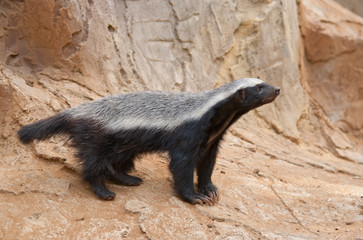
Physical Characteristics & Habitat: Despite their name, honey badgers aren’t particularly large animals. They usually weigh between 7-14kg (15-31lbs) and measure 50-77cm (20-30in) in length. Their bodies are low to the ground, with a loose, thick skin that’s remarkably tough and difficult for predators – or humans – to penetrate. This skin, along with their dense fur, provides significant protection. They are identified by their distinctive silvery-grey back and contrasting dark legs and faces.
Honey badgers boast an astonishing range of habitats, from rainforests and savannas to deserts and mountainous regions. They are extraordinarily adaptable, able to thrive in environments where many other animals struggle. They'll readily dig burrows, but will happily utilize burrows created by other animals, such as aardvarks.
Behaviour & Diet: Honey badgers are largely nocturnal, though they can be active during the day, especially in areas with less human disturbance. They are solitary hunters, fiercely independent, and known for their incredible intelligence. They are extremely tenacious. They don't just hunt; they persistently pursue prey, often ignoring pain and continuing to attack even when substantially injured.
Their diet is remarkably diverse. True to their name, they’ll eagerly locate and devour honey and bee larvae, demonstrating a tolerance for bee stings that is unmatched. However, this is just a small part of their diet. They prey on rodents, birds, reptiles (including venomous snakes, which they are surprisingly immune to), insects, and even larger animals like young antelopes. They are also opportunistic scavengers, taking advantage of carrion. They’ve even been observed raiding crocodile nests.
Conservation Status & Threats: The honey badger is currently listed as "Least Concern" by the IUCN. They are widespread and generally adaptable. However, they do face threats including habitat loss, persecution by farmers (due to livestock predation), and bushmeat hunting. Their fur is also sometimes used in traditional medicine. Their biggest protection is arguably their sheer attitude; very few animals are brave enough to consistently engage with them.
Fun Fact: Honey badgers possess a specialized gland near the anus that can secrete a potent, noxious-smelling fluid, used to mark territory and deter predators. They've demonstrated the ability to use tools - rolling logs to reach prey, or using stones to dig. And they have incredibly strong jaws, capable of cracking open tortoiseshells.