Badger Website
The Often-Overlooked Asian Badger: A Masterful Digging Machine
Continent
Asia
Description
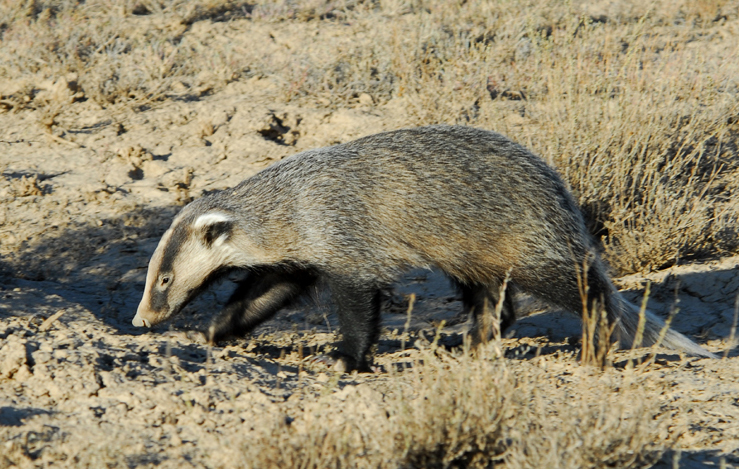
The Asian badger ( Meles leucurus), also known as the Chinese ferret-badger, is a fascinating and relatively understudied mammal native to East Asia, ranging from Russia's Far East, through Korea and China, to parts of Vietnam and Myanmar. Often confused with ferrets due to its elongated body and low-slung posture, this badger is a distinct species characterized by its dark brown to black coat, a distinctive white stripe running from the nose over the head, and relatively short, powerful legs adapted for digging. Unlike their European cousins who are predominantly nocturnal, Asian badgers exhibit a more flexible activity pattern, being crepuscular (active during twilight hours) and sometimes even diurnal, showcasing adaptability to their varying environments.
Their most defining behavior is undoubtedly their incredible digging prowess. Asian badgers are prolific burrowers, constructing elaborate underground networks called setts. These setts aren't just simple holes; they’re complex systems with multiple entrances, chambers for sleeping and rearing young, and storage areas. This extensive burrowing activity plays a vital role in soil aeration and turnover, contributing significantly to the health of the ecosystems they inhabit. They utilize this network for shelter, protection from predators, and raising their young, typically littering between two and five cubs in the early spring.
Dietarily, the Asian badger is an opportunistic omnivore. While their diet varies depending on the season and local availability, it primarily consists of invertebrates like earthworms, insects, and rodents. They are skilled hunters, able to locate prey both above ground and within their complex tunnels. Supplementing their animal protein intake are roots, fruits, and grains, demonstrating a versatility that allows them to survive in diverse habitats including forests, grasslands, and even agricultural areas. This broad diet makes them important seed dispersers as well, assisting in plant propagation throughout their range.
Unfortunately, the Asian badger faces a growing number of threats. Habitat loss and fragmentation due to deforestation and agricultural expansion are major concerns, shrinking their potential range and isolating populations. They are also heavily impacted by hunting and trapping, often being targeted for their meat, fur, and medicinal properties in traditional Asian medicine. While not currently listed as endangered on a global scale, their populations are declining in many areas, and they are considered vulnerable or near threatened in several regions.
Conservation efforts for the Asian badger are hampered by the lack of comprehensive research on their population size, distribution, and ecological role. Increased studies focused on understanding their specific needs, along with stricter regulations on hunting and habitat destruction, are crucial for ensuring their long-term survival. Protecting the Asian badger isn't just about preserving a single species; it's about maintaining the health and biodiversity of the complex ecosystems they inhabit and the intricate web of life they contribute to.